
The Linking Line
About The Linking Line –
The Linking Line (TLL) is an ongoing participatory art project exploring the interplay between language, neurodiversity, and contemporary calligraphy art. Each project bridges calligraphy with paper-based practice and textile exploration.
The project emerged from my personal experiences with dyslexia, multilingualism, and the ongoing challenge of navigating language across cultures. Over time, I became weary of constant spelling mistakes and the effort to live and communicate through foreign languages — as well as the struggle to remember people's and places' names.
Although Spanish is my mother tongue, English gradually took over as my primary language, pushing Spanish into the background. During my time living in Myanmar — while learning Burmese and studying Buddhist theology — I conceived the idea of an infinite line: one without beginning or end.
I began by painting Burmese alphabet characters with Chinese ink on rice paper. Then, through the act of linking them with strokes, images began to emerge — and The Linking Line was born.
Since then, TLL has evolved into a practice-based research project, unfolding through three thematic chapters that examine names, identity, and place. These iterations — Burmese Lines, Family Lines, and Jerusalem Gate Names - YOU NAME IT — document the project's conceptual journey of the project through process and personal reflection. Each chapter is available as a downloadable PDF.
Burmese Lines
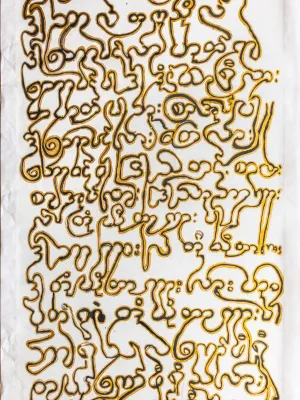 Burmese Lines
This chapter presents four artistic experiments. Samsara and The Golden Lines taking inspiration from the book of John Okell's Introduction to Burmese Script, exploring the visual of Burmese letterforms. A third experiment bridges Latin script and Burmese Pyo Pyo style poetry.
The final works in this chapter include Between the Lines, The Pillow Book, and The Scroll.
Between the Lines were transformed into printed textile cushions, merging writing with soft sculpture tactile form.
The Scroll — a 20-meter contemporary work — showcases the spectrum of TLL calligraphy styles in varied colors and alphabets.
Family Lines
Having lived in many countries, I often struggle to remember people's names and spell them correctly. My dyslexia has perhaps strengthened my visual memory over text. As TLL developed, I chose to focus on names as a central thread of research.
This chapter includes:
Padrin@ Dame un Nombre (The Given Name Project) — an interactive ecological art project linking people with fruit trees in Murcia through naming and symbolic adoption.
Family Names — developed during the pandemic while I was living at El Refugio, our family's country house near my hometown. All family members wrote their names together on a 3m x 10m canvas, reinforcing familial connection through shared mark-making.
This chapter explores lineage, memory, ecology, and collective authorship. Family Lines became a point of intersection between visual calligraphy and socially engaged art — showing how writing names together can generate unity.
Padrin@ Dame Un Nombre
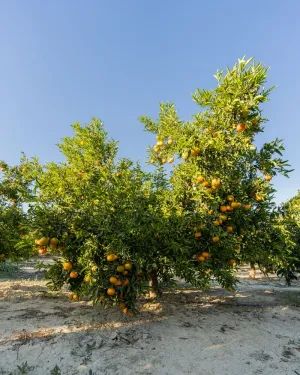 Retrato de Alegria Decklerck | Fotografia Hall’Makwanda | 2021
Padrin@ Dame Un Nombre es un proyecto de arte interactivo que tiene como objetivo concienciar ecológicamente sobre la destrucción del medio ambiente en Murcia y la tala de árboles frutales. Las personas que participen en el proyecto tendrán la oportunidad de adoptar un árbol, al que le darán un nombre, y con el que podrán crear una 'familia' ficticia. El objetivo es crear vínculos personales entre los árboles y las personas.
Los adoptantes (Padrin@s) recibirán un certificado de adopción por un año renovable con información y hermosas fotos de su árbol adoptado. Sus nombres, junto con el nombre que le dan a su árbol, formarán parte de la obra de arte "El Mural Enraizado" que se basa en el estilo de caligrafía llamado 'Línea de enlace'.
Jerusalem Gate Names – You Name It!
This chapter draws on toponymy — the study of how names shape our experience of space. I was especially struck by the multilingual street signs in Jerusalem's Old City, where Hebrew, Arabic, and English are layered together on ceramic tiles.
This inspired You Name It based on Jerusalem gates names, a project transforming these multilingual names into calligraphic works. The resulting images abstract the written names into fluid forms, allowing viewers to reinterpret them through their own lenses.
The title You Name It reflects on naming as a powerful act — one that defines ownership, memory, and identity. While it cannot resolve political conflict, it offers a poetic gesture toward unity and peace.